You live in mainland China. You own a Hong Kong company. Clients keep paying into its bank account, and every year you pay someone to handle the accounts. When documents arrive, you sign them. Eventually, you receive an audit report in English and assume another year has been taken care of.
Yet the more money accumulates, the less comfortable you feel. Why has the company paid no tax for several years? Does it matter that you and your staff work in mainland China while Hong Kong provides little more than a registered address? And when you want to use some of that money personally, how do you take it out?
Those are sensible questions. “My accountant handles it every year” is only reassuring if you know what has actually been done.
Start with the business itself: who earns the money, where the work happens, how transactions appear in the accounts, what has been reported to the tax authorities, and how funds eventually reach the owner. The examples below are hypothetical. They illustrate the questions to ask; no single fact determines a company's entire tax position. Amounts are in Hong Kong dollars where stated; the mainland tax examples use renminbi.
First, find out what your annual service fee actually covers.
Company renewals, bookkeeping, audits and tax returns are often sold together. That does not make them the same job, or mean that all four have been completed.
Suppose your service provider renews the business registration and files the company's annual return. Those corporate formalities may be up to date. They do not establish that financial statements have been prepared, an audit completed or a profits tax return filed. A Hong Kong private company's annual return generally follows its incorporation anniversary, which is a different timetable from its financial year-end and tax filing obligations.

Bookkeeping turns transactions into accounting records and financial statements. An audit involves obtaining evidence and expressing an opinion on those statements. Tax filing requires a separate calculation of taxable profits under the tax rules.
Take a piece of equipment. The company has paid for it, and the payment appears on the bank statement. That does not necessarily mean the entire price can be deducted as an operating expense for tax purposes in that year. The accounting treatment and the tax treatment each need to be worked through.
Ask for the complete financial statements and auditor's report, the tax return as filed, the tax computation, evidence of submission, and any assessments or enquiry letters from the Inland Revenue Department, or IRD. If something is still outstanding, ask which step has not been completed and why.
Read the audit opinion before you put the report away.
There are four main outcomes: an unmodified opinion, a qualified opinion, an adverse opinion, and a disclaimer of opinion. “Adverse qualified opinion” is not a separate category.
Two questions explain the distinction. Has the auditor found something wrong, or been unable to obtain enough evidence to decide? And is the effect confined to a particular part of the accounts, or pervasive across them?
| Audit opinion | What it means in practical terms |
|---|---|
| Unmodified opinion, often called a clean opinion | The auditor has sufficient appropriate evidence and concludes that the statements meet the applicable financial reporting requirements in all material respects. |
| Qualified opinion | An identified misstatement is material but not pervasive, or missing evidence could have material but not pervasive effects. |
| Adverse opinion | The auditor has evidence of misstatements that are both material and pervasive. |
| Disclaimer of opinion | The auditor cannot obtain sufficient appropriate evidence, and the possible effects could be both material and pervasive. |
Consider a clean opinion first. Your company reports HK$8 million in revenue and HK$6 million in purchases and other expenses. Contracts, delivery records and bank statements support the transactions. Receivables and payables can be verified, and the important accounting treatments are appropriate. Having obtained sufficient appropriate evidence, the auditor may conclude that the statements present the company's financial position and results fairly.
That is useful assurance. It is not a guarantee that every transaction is beyond question, or that the IRD has accepted every tax position. A financial statement audit provides reasonable assurance, not absolute assurance, and the audit opinion is not a tax clearance certificate.
A qualified opinion can arise in different ways. Suppose most of the records are reliable, but there is no adequate evidence for a significant batch of year-end inventory. The auditor cannot verify it through alternative procedures either. If the possible effect is material but not pervasive, the result may be a qualified opinion.
Now change the facts. A customer has owed the company money for a long time, there is clear evidence that some of it will not be recovered, and management refuses to record the necessary impairment. Here, the auditor has identified an accounting problem. If it is material but not pervasive, that too may lead to a qualified opinion.
The response depends on the reason. Missing evidence requires a different solution from an accounting treatment that management refuses to correct. Read the basis for qualification: what is affected, which figures are involved, and what would resolve it?
An adverse opinion is more serious. Suppose the company records substantial revenue from transactions that have not actually been completed and continues to carry worthless assets at inflated amounts. The auditor obtains evidence that revenue, profit and assets are materially misstated across the statements, but management refuses to adjust them. An adverse opinion may follow. This is not merely a request for a few missing receipts.
A disclaimer addresses a different problem. Imagine providing only a spreadsheet of money in and money out, with most contracts, bank records and purchase documents missing. The auditor cannot obtain adequate evidence through other procedures. Revenue, costs, assets and liabilities all have significant gaps. The auditor may be unable to express an opinion at all.
That does not establish that every transaction is fictitious. It means the evidence is too limited to support an overall opinion.
There is no fixed number of missing documents that automatically produces a particular opinion. Materiality, the nature of the issue and how widely it affects the statements all matter. Nor does an “emphasis of matter” paragraph necessarily mean a qualification. An auditor might draw attention to significant litigation that has been properly disclosed without modifying the opinion.
Can you explain the costs, or only show that the money left the account?
A bank transfer proves a payment occurred. It does not, on its own, prove that a service was performed or that the Hong Kong company should bear the expense.
Suppose you pay a consultancy HK$1 million under a contract labelled “overseas market development.” What did it actually do? Who did the work? What was delivered? Why did it cost that amount? A generic contract, an invoice and a transfer may not be enough to substantiate the transaction.
Or suppose you use the company account to pay for a family holiday and record the flights and hotels as business travel. If the trip had no genuine business purpose, the payment does not become a deductible business expense just because the company paid it. Hong Kong profits tax deductions require the relevant connection to producing chargeable profits; private expenditure cannot simply be added to the company's expenses.
The opposite shortcut is also wrong: a payment to an individual is not automatically non-deductible. If that individual genuinely delivered a service, the work, supporting records and applicable tax requirements need to be considered.
High revenue and low profit are not inherently suspicious. A trading business can have substantial turnover and a thin margin. The question is whether its contracts, deliveries, expenses and payment records tell a coherent story.
Several years without a tax bill can mean very different things.
Perhaps there genuinely were no assessable profits. A company with HK$3 million in revenue might have allowable costs exceeding that amount and remain in a tax loss after the relevant adjustments. It may owe no current profits tax, while still having filing and recordkeeping obligations.
Perhaps the accounts show a profit, but the company claims that it arose outside Hong Kong. That is the offshore profits issue discussed below.
Perhaps a return has been filed but the assessment or an enquiry is still being dealt with. No demand for payment yet does not mean the IRD has permanently accepted the position.
Or perhaps the company has been trading and receiving money without making the required filings, or has filed returns that do not reflect the facts.
Imagine two companies, each with HK$5 million in the bank and no history of paying tax. One can produce complete returns and explain its treatment for every year. The other cannot find a filed return and relies on an intermediary saying, “You don't need to worry.” Those are very different positions.
For an offshore profits claim, ask what earned the money and where those activities happened.
Hong Kong generally taxes profits on a territorial basis. Identifying their source requires looking at the operations that produced them. An overseas customer, a Hong Kong bank account or a contract bearing the company's Hong Kong address cannot settle the issue by itself.
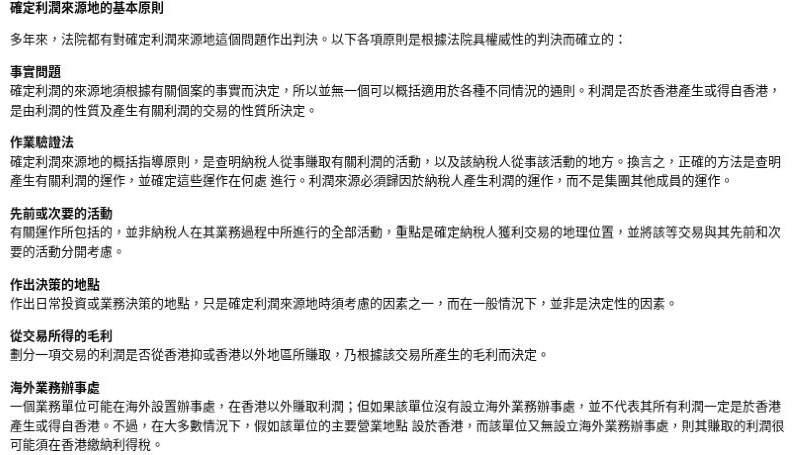
Suppose a mainland factory ships goods directly to your American customer. The goods never enter Hong Kong. Does that automatically make the trading profit offshore? You still need to examine how the purchase and sale contracts were negotiated, concluded and carried out, who performed the relevant work, and where. Neither the shipping route nor the place where someone signed the last page tells the whole story.
For a service business, imagine a Hong Kong company contracting with a US client to develop software. The client pays its Hong Kong account, but development, testing and customer support all take place in mainland China. The place where those services were actually performed cannot be left out of the source analysis.
An offshore claim needs evidence that matches the business: emails, orders, negotiation records, work records and deliverables. Last year's treatment cannot simply be copied into this year's return if the operations have changed.
Other types of income may require a different analysis. Suppose a Hong Kong company belonging to a multinational enterprise group receives a foreign subsidiary's dividend in Hong Kong. Hong Kong's foreign-sourced income exemption regime may need to be considered, along with the relevant exemption conditions. A conclusion reached for trading income cannot simply be reused for foreign dividends, interest or disposal gains.
If the business is run from mainland China, examine the mainland tax position too.
Start with where the company is actually managed.
Hong Kong incorporation does not, by itself, restrict a company's tax obligations to Hong Kong. Mainland rules also consider where substantive and overall management and control of its business, personnel, accounts and property take place. A company with its de facto management body in mainland China may be treated as a mainland resident enterprise.
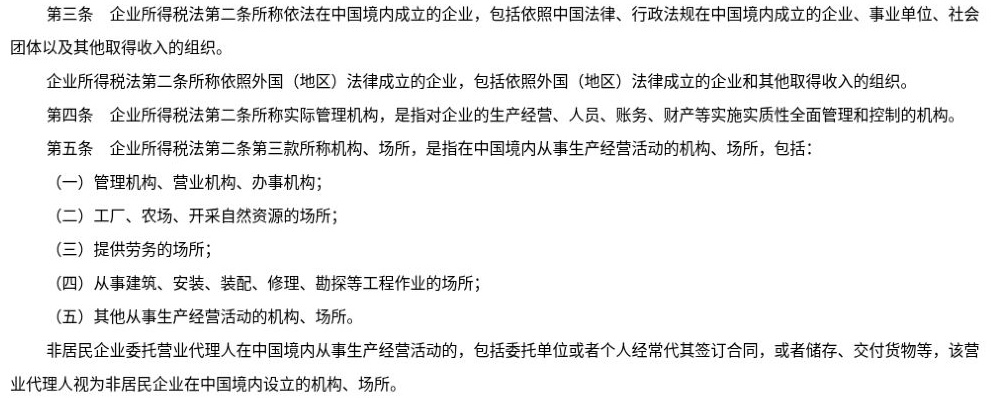
Suppose you decide from Shenzhen which customers to accept. Your Shenzhen team sets prices. Hiring, payments, financial decisions and the use of profits are also controlled there. Hong Kong provides only a mailing address, with nobody actually managing the company. Its place of effective management needs serious attention.
Now suppose the owner lives in mainland China but a genuine Hong Kong management team makes the company's substantial business, finance and staffing decisions there, with records showing that it actually does so. The owner's home address alone would not justify treating the company as a mainland resident enterprise.
Renting a desk in Hong Kong or preparing a set of board minutes does not automatically fix the issue. The management activity described in the records needs to happen in reality.
If the company is ultimately treated as a mainland resident enterprise, its worldwide income generally comes within the mainland enterprise income tax framework. The standard statutory rate is 25%, but the tax calculation still depends on taxable income, applicable reliefs and foreign tax credits. You do not multiply all bank receipts by 25%.
For a simplified example, RMB1 million of taxable income at 25% produces RMB250,000 of tax before considering other factors. Qualifying foreign income tax may then require a credit analysis. Simply adding the Hong Kong and mainland headline rates gives a misleading result.
Even if the company is not mainland tax resident, its mainland operations may still matter.
Consider a company genuinely managed in Hong Kong that uses a fixed office in Shenzhen, where a team continuously performs core business activities. Those operations may create mainland tax obligations even though the company's overall tax residence remains elsewhere.
This brings in domestic establishment rules and, where applicable, the permanent establishment provisions of the Mainland–Hong Kong tax arrangement. Fixed premises, agency activities and the provision of services have different tests. A lack of Hong Kong premises does not automatically create a mainland permanent establishment, and one day-count threshold cannot be applied to every type of activity.
For comparison, buying goods from an independently operated mainland factory does not automatically make that factory your company's permanent establishment. You need to examine the relationship, whether premises are at the company's disposal, and whether people are acting on its behalf in the relevant way.
Even where a permanent establishment exists, the next question is which profits are attributable to it. That does not mean taxing every receipt of the Hong Kong company worldwide.
If you own companies on both sides, how are the profits divided?
Suppose the mainland company handles development, procurement, quality control and after-sales support. Its costs are RMB9 million, and it charges the related Hong Kong company RMB9.05 million. The Hong Kong company sells to outside customers for RMB12 million.
Why does the mainland company retain only RMB50,000 while Hong Kong retains the RMB2.95 million difference before any further Hong Kong expenses? What explains that allocation?
“They are both mine” is not an answer to a transfer pricing question. Related-party pricing needs to reflect the functions each company performs, the assets it uses and the risks it bears, consistently with the arm's-length principle.
The numbers alone do not establish that the pricing is wrong. If the Hong Kong company genuinely controls valuable customer relationships, uses important assets and bears inventory or credit risk, those facts belong in the analysis too.
What you need is a defensible explanation for the pricing, supported by the business. An intercompany agreement signed by both companies is only part of that evidence.
How could the mainland authorities know about money in Hong Kong? Understand what CRS actually reports.
CRS—the Common Reporting Standard—is a framework for identifying, reporting and exchanging financial account information. Where the reporting conditions are met, Hong Kong financial institutions report relevant information to the IRD, which exchanges it with the appropriate tax jurisdictions. Mainland China is among Hong Kong's reportable jurisdictions.
That does not mean every Hong Kong company owned by a mainland resident has all its accounts reported as though they were the owner's personal accounts. For an entity account, the institution must consider the account holder, its tax residence and its classification.
Suppose you are a mainland tax resident who owns a Hong Kong company. The bank account belongs to the company. The bank needs to establish the company's status; if it is a passive non-financial entity, or passive NFE, it must also examine its controlling persons.
An operating business versus an investment holding vehicle is a useful starting point for understanding active and passive entities, but intuition cannot replace the classification rules. Under the common income-and-assets test for active NFE status, less than 50% of gross income in the relevant period must be passive income, and less than 50% of assets must produce, or be held to produce, passive income. There are other routes to active status, so that test is not the only one for every entity.
A genuine trading business whose income and assets satisfy those tests may qualify as an active NFE. A company that has largely stopped trading and now holds investments generating interest and dividends needs its passive status examined. Some investment entities qualify as financial institutions, however, so “it holds investments” is not enough to classify every company as a passive NFE.
Does active status mean nothing is reported? No. An active NFE is generally not subject to the passive-entity look-through reporting of controlling persons, but its own account can still be reportable if the entity is itself a reportable person. “Active” is not a blanket exemption from CRS.
Now consider a passive NFE that is tax resident only in Hong Kong and has an account with a Hong Kong bank. Its controlling person is a mainland tax resident. That person's status can still make the account reportable. Putting a company between an individual and an account does not necessarily keep the individual out of the reporting process.
CRS is not a live feed of every payment. Reported information generally includes identification and tax residence details, the account number, and the year-end balance or value. Depending on the account type, it can also include interest, dividends, certain other income and gross proceeds from sales of financial assets. Gross securities sale proceeds are not the same as investment gains, and CRS does not mean every business's sales receipts are automatically exchanged transaction by transaction.
For example, a reported year-end balance equivalent to RMB5 million might include customer advances and money lent by a shareholder. Reporting that balance does not turn the entire amount into the shareholder's taxable personal income. The tax analysis still has to establish what the money represents, whose it is, when the relevant income arose and how it has already been reported.
Take tax residence self-certification forms seriously. If a trading company stops operating and becomes primarily an investment vehicle, its classification may need to change. Changes in an individual's or an entity's tax residence may also require updated information. A Hong Kong identity card or registered address does not settle these questions on its own.
Keep CRS and CFC separate. CRS concerns information reporting and exchange. CFC rules concern potential tax adjustments for certain profits retained in a controlled foreign enterprise. A CRS report does not automatically trigger CFC taxation, and the absence of a CRS-related enquiry does not remove existing tax obligations.
Can you avoid the issue by leaving all the profits in the company?
Company profits are not automatically the shareholder's personal income in the year they are earned. But retaining profits indefinitely can raise a separate question: is there a reasonable business need for doing so?
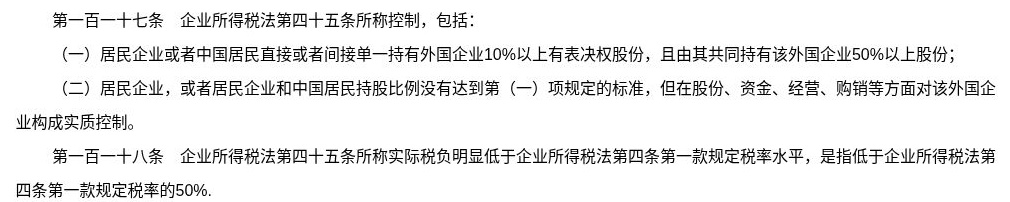
Controlled foreign enterprise rules—usually called CFC rules—can bring control, effective taxation and the commercial reasons for retaining profits into the analysis. The applicable provisions differ depending on whether the shareholder is a mainland resident individual or a mainland resident enterprise.
Suppose a company has accumulated RMB8 million in profits and needs to fund purchases and warehouse expansion next year. Orders, budgets and payment schedules support that plan. There is a concrete explanation for retaining the money.
Compare a company with a persistently low effective tax burden that accumulates substantial profits year after year, has no corresponding operational plans and cannot explain why nothing is distributed. If it is controlled by mainland tax residents, the anti-avoidance position deserves closer examination.
Neither “no Hong Kong tax” nor “no dividends for several years” proves, by itself, that an adjustment is required. Nor is there a universal three-year or five-year waiting period after which CFC rules automatically apply.
Profit source, company tax residence and shareholder-level CFC exposure are different questions. Making an offshore profits claim in Hong Kong is not an admission that the company is mainland tax resident, and it does not automatically trigger CFC rules. Where different rules touch the same income, attribution and relief from double taxation must also be considered.
Personal ownership and ownership through a mainland company require different analyses.
Suppose you personally own 100% of the Hong Kong company and are a mainland resident individual. Article 8 of the Individual Income Tax Law and the relevant rules need to be considered: control, a significantly low effective tax burden, and a failure to distribute—or an insufficient distribution of—profits attributable to you without reasonable business needs. It is not enough to spot retained profits and multiply the entire bank balance by 20%.
Now suppose a mainland company owns 100% of the Hong Kong subsidiary. The analysis turns to Article 45 of the Enterprise Income Tax Law and its related provisions. If the conditions are met, the issue concerns profits attributable to the mainland resident enterprise. Those profits are not automatically a personal dividend to the ultimate owner.
The control percentages in the screenshot, and the effective-tax threshold of less than half the standard 25% rate—12.5%—come from the corporate implementing rules. They should not simply be transplanted into the individual income tax anti-avoidance provision. Effective taxation also requires examining the relevant profits and rules; it is not necessarily the jurisdiction's advertised headline rate.
Suppose retained subsidiary profits have already been included in the mainland parent's income under the applicable rules. When the subsidiary later distributes them, the earlier inclusion and the relevant rules preventing duplication need to be checked. You cannot calculate the same income again without regard to that history, or casually add company tax, a parent-level adjustment and personal dividend tax to produce a supposed universal total.
Keep evidence of the business need to retain funds. “We plan to expand” is more credible when supported by orders, budgets, payment commitments and actual funding requirements. Applicable corporate exemptions or circumstances in which an adjustment is not required also belong in the review. Low tax and an absence of dividends are the beginning of the enquiry, not its conclusion.
What if a mainland parent completed ODI procedures before setting up the Hong Kong subsidiary?
ODI means outbound direct investment. Here, assume a mainland enterprise has completed the investment procedures required for its Hong Kong subsidiary. That does not mean the companies' tax residence, intercompany pricing or treatment of future profits has also been approved.
Imagine the subsidiary signs overseas customer contracts and receives the money. It has no operating team in Hong Kong. Mainland staff handle procurement, sales negotiations, accounting and treasury decisions. The subsidiary claims offshore treatment in Hong Kong and retains its profits for years.
Checking the investment paperwork is only one part of the review. The offshore source claim needs supporting business evidence. Actual management and mainland operations need to be examined. Work performed and costs borne by the mainland parent raise transfer pricing questions. Retained profits may require a CFC analysis if the relevant conditions are met. CRS reporting depends on the entity's classification and tax residence.
Make the example more concrete: the Hong Kong company receives RMB12 million a year from customers, while the mainland company performs procurement and after-sales work and employs the staff. Hong Kong pays it just enough to cover its costs. Why does the mainland business do so much and bear the associated risks for almost no profit? Even a valid Hong Kong offshore claim cannot answer that question for the mainland company.
These are distinct issues to investigate, not a list of taxes that automatically apply together. One conclusion may change the next stage of the analysis. If the company's own tax residence is reassessed, for example, its income and the relevant rules must be reconsidered on that basis, rather than continuing to assume it is a foreign non-resident company for every other purpose.
Review the parent, subsidiary, actual teams and flow of funds together. The absence of Hong Kong employees or premises is relevant evidence, but it cannot decide every tax issue on its own.
“It's my company. Why can't I take some money out?”
You can receive money from your company lawfully. The nature of the payment matters: loan repayment, expense reimbursement, salary and dividend are different things.
Suppose you genuinely lent the company RMB1 million, and the loan documents, accounting entries and transfers all agree. Repayment of that principal is different from receiving RMB1 million of distributed profits.
Likewise, if you paid a genuine supplier invoice on the company's behalf, a properly documented reimbursement is not automatically a dividend. But writing “reimbursement” on a transfer does not create an expense you never incurred.
Salary needs its own analysis. Where you perform your duties, your employment arrangements and your tax residence can all matter. Payment from a Hong Kong bank account does not automatically remove mainland tax obligations.
If you are a mainland resident individual and the payment is genuinely a dividend, mainland individual income tax rules generally apply, ordinarily at a flat 20% rate for this category of income. In a simplified example, a dividend equivalent to RMB1 million would produce RMB200,000 of individual income tax before considering any applicable special treatment or creditable foreign tax.
Profits tax paid by the company cannot simply be treated as individual income tax already paid by you. Nor does leaving the dividend in your personal Hong Kong account, without remitting it to mainland China, automatically remove the reporting obligation.
The bank balance is not the profit.
Suppose the company holds RMB5 million in cash. RMB2 million consists of customer advances for unfinished projects, RMB1 million comes from a shareholder loan, and supplier invoices are still outstanding. A RMB5 million balance does not establish RMB5 million of profit.
The reverse matters too. A transaction may already meet the applicable conditions for revenue recognition even though the customer has not paid. Waiting for cash to arrive is not automatically the right accounting or tax treatment.
Bank statements are essential, but adding up deposits and subtracting withdrawals will not explain the entire business. Contracts, performance, outstanding balances and the nature of each payment have to be reconciled.
What should you do if several years of accounts and tax filings are unclear?
Build the history year by year.
One year may show a tax loss, another an offshore claim, a third an overdue return, and a fourth an audit qualification affecting opening balances. Those are different problems and require different responses.
Reconstruct the money and the balances. Separate revenue, loans, capital contributions, customer advances, amounts collected for others and withdrawals by the owner. A long-standing “amount due to director” of RMB3 million needs an explanation. If customer sales receipts were incorrectly posted as a director's loan, later transferring them to the owner as a supposed loan repayment can create problems in both revenue reporting and shareholder withdrawals.
Review Hong Kong and mainland treatment together. Hong Kong work may involve correcting expenses or revisiting profit source. Mainland work may concern actual management, establishments, related-party pricing or personal income. The facts and the relevant year determine whether accounts need correction, returns need to be filed or amended, tax is payable, and how to approach the authorities.
Interest, late-payment charges and penalties need separate consideration under the applicable rules. Voluntary correction cannot be promised to eliminate every penalty. A replacement audit report does not erase the underlying transactions.
Once the history is understood, make future arrangements reflect how the business will actually operate. If the mainland company will undertake development and Hong Kong will handle overseas sales, staff responsibilities, contracts, charges and profit allocation should support that division. Changing the name at the top of a contract while leaving everything else untouched does not achieve that.
Missing records can sometimes be reconstructed from banks, customers and suppliers, with the basis clearly documented. Do not backdate a newly signed contract to make it look contemporaneous, or invent work that never happened.
Here is how a review might look in practice. A company has traded for four years and holds RMB5 million. Its owner says, “We've had audits, but we've never paid tax,” and cannot explain the filings.
The first year's report has a clean opinion, while the tax computation claims a loss. The second year's opinion is qualified because of inventory evidence. The third year introduces an offshore profits claim. The fourth year's tax return has not been filed. The review must verify the first year's loss, resolve the second year's inventory evidence, investigate the third year's source claim and IRD correspondence, and address the fourth year's outstanding filing. Four years without a payment does not mean four identical tax positions.
Next, reconcile the RMB5 million. RMB2 million is traced to advances for unfinished projects and RMB1 million to a genuine shareholder loan. The remaining RMB2 million still needs to be checked against historical revenue, expenses, receivables, payables and recognised profits. Neither RMB5 million nor the residual RMB2 million can simply be assumed to be taxable profit.
An expense review then identifies RMB300,000 booked as marketing that was actually household spending. The accounting and tax treatment need correction. Which year's tax is affected, and by how much, depends on the original filings, profit source and applicable rules—not just an amount multiplied by a chosen rate.
At the same time, establish who negotiated contracts, delivered services and managed the company. If those activities were principally in mainland China, investigate the mainland position as well. Correcting a Hong Kong report does not resolve obligations elsewhere.
Only then can you prepare a meaningful year-by-year schedule of missing evidence, accounting corrections, filing actions, estimated tax and other possible consequences. The future operating arrangements must also be implemented in practice. That is how you resolve a historical problem; changing accountants and obtaining freshly bound reports is not enough.
Good records start with the next order.
Record who contracts with the customer, who does the work, who receives payment and who bears the costs.
If Company A signs the contract but Company B pays the invoice, preserve the explanation and supporting documents for that third-party payment at the time. Several years later, “The customer must have arranged it” is a poor substitute.
If the owner withdraws RMB200,000, establish what the payment actually represents and record it properly. Leaving it indefinitely in “other receivables” makes the eventual explanation harder.
Revisit the tax analysis when the business changes. Moving the delivery team from outside mainland China to the mainland can change the relevant facts. A trading company that begins receiving dividends or selling investments may encounter rules that its original trading analysis never addressed.
Relevant Hong Kong business records generally need to be retained for at least seven years. Keep records for unresolved disputes or historical issues for as long as they remain necessary.
And if the shareholder is a mainland enterprise, remember that completing outbound investment procedures does not settle the subsidiary's future tax treatment. How it earns its profits, how it deals with its parent and why it retains earnings still need separate answers.
Take the latest year's full file and ask the person handling your accounts and tax to walk you through one real transaction: how revenue was recognised, why the costs are deductible, where the profit arose, where the company was managed and how money reaches the shareholder.
You should be able to follow the explanation back to facts and documents. “The audit is done—don't worry” is not enough.
← Back to Upwell Insights