The pitch sounds straightforward: open your Amazon seller account through a Hong Kong company, use its business registration certificate, and your sales data will stay outside mainland China's tax reporting system. Because the company sells goods, it should also qualify as an active entity under the Common Reporting Standard, or CRS. The bank therefore won't look through it to report the mainland owner.
There is some substance to that argument. But it stretches a limited point about routine reporting into a much broader claim about what tax authorities can obtain. Sellers may then take it one step further and assume the income has no mainland tax implications at all.
Before relying on that advice, it helps to follow the business from the sale to the bank account, and eventually to the owner.
Start with who is selling—and to whom
Take a Hong Kong company selling physical goods to overseas customers through an Amazon marketplace outside mainland China. You cannot simply apply the reporting treatment for a mainland seller to that business.
Mainland China's platform tax reporting rules require overseas platforms to report identity and income information for mainland sellers. They address overseas sellers separately, including certain income from sales of services and intangible assets to mainland customers. A Hong Kong company shipping goods to customers abroad and an overseas business selling services into mainland China do not necessarily fall within the same reporting category.
That distinction matters. It gives some basis for saying that a qualifying Hong Kong seller may be treated differently from a mainland seller under the routine reporting rules. It does not justify promising that a Hong Kong business registration certificate will keep every piece of store data out of mainland China indefinitely.
For an actual store, you still need to check the legal entity recorded on the seller account, any changes to that entity, and the platform's current reporting procedures. A general reading of the rules cannot establish what Amazon has reported for a particular account.
Why CRS enters the conversation
Once the customer pays, the money has to go somewhere. Platform reporting concerns the seller's business activity. CRS concerns financial accounts. The information may overlap in its usefulness to a tax authority, but the two systems collect different things.
CRS generally covers information such as the account holder's identity, the account balance or value, and specified income or proceeds, depending on the account. It is not a feed of every Amazon order and advertising charge.
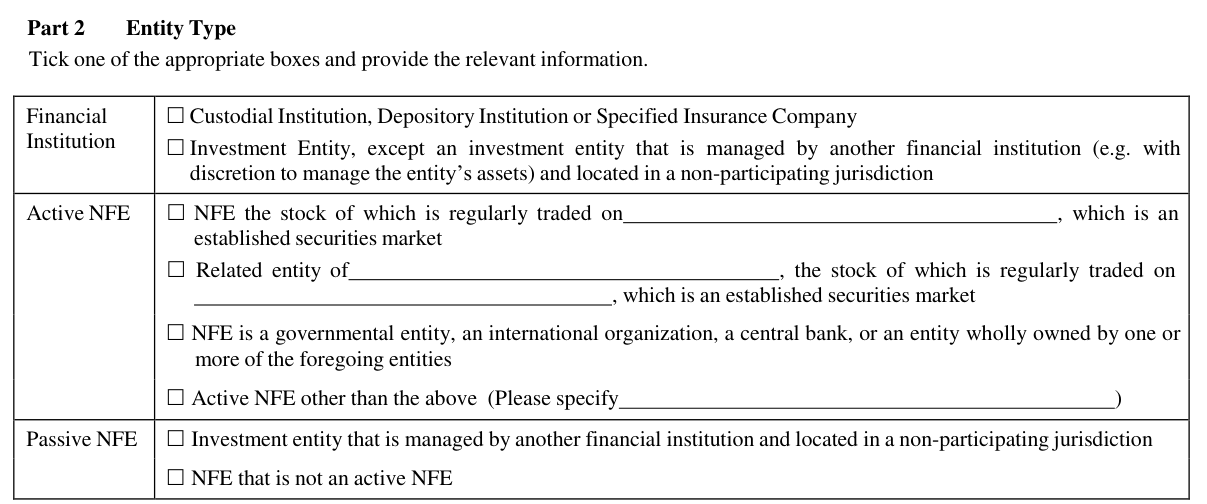
A trading business may qualify as an Active Non-Financial Entity, usually shortened to Active NFE. This is where the distinction between a trading company and a company mainly holding investments becomes relevant. But recording some sales and having audited accounts does not, by itself, establish Active NFE status.
Under the income-and-assets test commonly relevant to a trading business, less than 50% of gross income must be passive income, and less than 50% of its assets must produce, or be held to produce, passive income over the relevant reporting period. Both conditions matter. Other routes to Active NFE status exist, but “we registered a trading company” is not a substitute for applying the right test.
A company that buys stock, sells products and collects customer payments may have a very different profile from one that mainly holds securities and earns dividends or interest. Calling the second company a trading business does not change what it actually owns or earns.
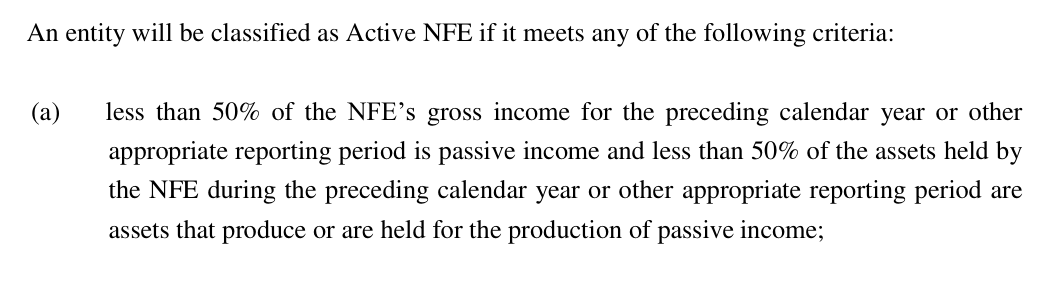
Active status does not answer every reporting question
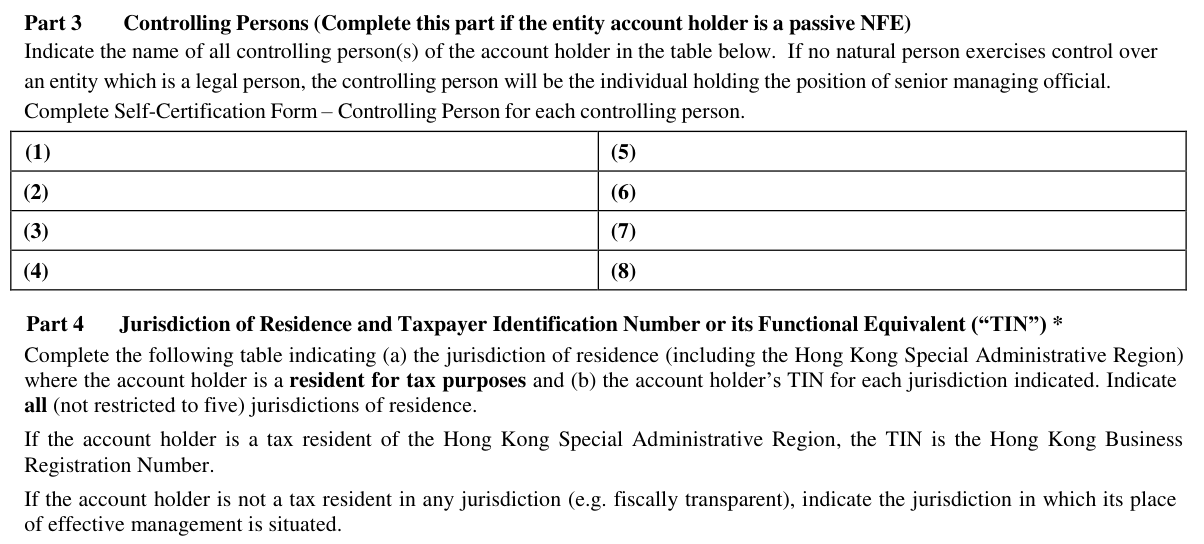
The bank has two separate questions to resolve. Is the company itself a reportable account holder? And, if it is a Passive NFE, are any of its controlling persons tax residents of a reportable jurisdiction?
An Active NFE generally does not face the controlling-person look-through that applies to a Passive NFE. The company's own tax residence still matters.
Suppose the company is tax resident only in Hong Kong, holds its account with a Hong Kong bank, and properly qualifies as an Active NFE. Its account would generally not be reported to mainland China under the Passive NFE controlling-person rules merely because its shareholder is a mainland tax resident. That is a defensible statement, provided those facts hold.
The problem is assuming those facts from the place of incorporation alone. A Hong Kong company whose operations, personnel, finances and assets are substantively and comprehensively managed from the mainland may raise a mainland tax residence issue under the effective management rules. A Hong Kong incorporation certificate does not settle that question. Equally, the owner's mainland home address is not enough, on its own, to settle it the other way.
The official self-certification form makes the distinction quite clear: controlling persons are addressed in one section; the company's own tax residence is addressed in another.
There is also the owner's personal account to consider. Money paid out of a company account does not carry the company's Active NFE classification into the shareholder's personal offshore account. Third-party payment accounts need their own assessment too, taking account of the provider, the account holder, the product and the jurisdiction. “The Hong Kong company receives the money” is not enough detail to determine the reporting treatment.
An export VAT refund does not settle the income tax position
Another argument goes like this: China encourages exports, qualifying exports receive VAT relief, and the mainland business still pays income tax. So the Hong Kong structure cannot be costing the mainland any tax revenue.
Whether the arrangement leaves tax unpaid depends on the actual transactions and how the profits are allocated. Export incentives do not answer that question.
Consider a seller with a mainland company handling procurement and day-to-day operations, while a Hong Kong company contracts with overseas customers. Both companies have the same owner. The prices charged for goods and services need to reflect what each business does, the assets it uses and the risks it bears. If most of the work and risk sit in the mainland, an arbitrary price that leaves nearly all the profit in Hong Kong needs more explanation than “exports qualify for VAT refunds.”
VAT relief and corporate income tax deal with different parts of the business. An export VAT exemption is also different from a refund, and goods leaving the country do not automatically generate a refund entitlement. Refunds can improve cash flow and reduce the VAT cost of qualifying exports. When calculating the margin, though, you have to account for the VAT already borne on purchases. The cash refund cannot sensibly be treated as a separate windfall.
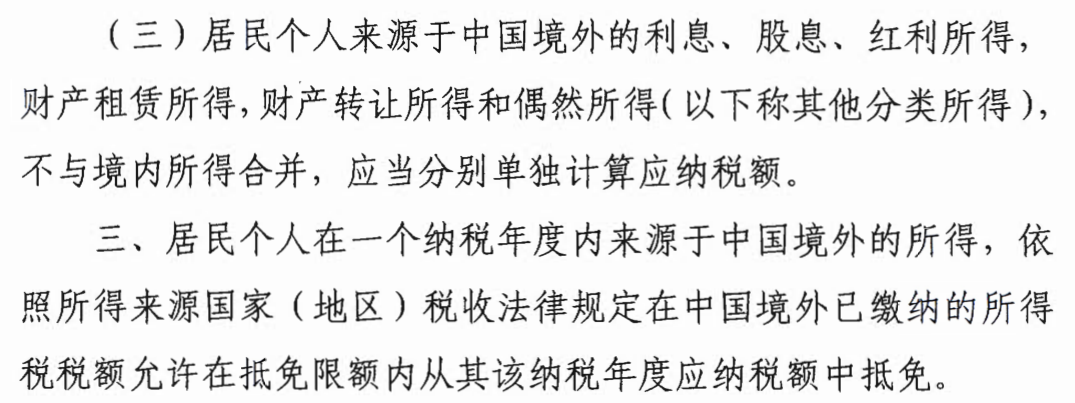
Then there is the dividend. If the Hong Kong company distributes profits to a mainland tax-resident shareholder, that individual will generally need to consider mainland tax and filing obligations on the foreign-source dividend. Eligible foreign income tax may qualify for a credit within the applicable limits. The company's payment of Hong Kong profits tax does not, by itself, discharge the shareholder's personal tax liability.
Leaving the dividend offshore does not, by itself, remove those obligations either.
Make sure the business can explain its own transactions
Even where the store falls outside a particular routine platform reporting requirement, and the company account is not exchanged on the basis of a mainland controlling person, other records still exist. Procurement documents, customs declarations, payments and related-company accounts may all be relevant. Tax authorities may also obtain information through lawful investigations or tax information exchange procedures, where the relevant conditions are met.
That does not mean every account and transaction is already visible in real time. Access to information has its own legal requirements and procedures. It does mean that an exception from one reporting channel cannot support a blanket promise of invisibility.
For an Amazon seller considering a Hong Kong company, the useful questions are practical ones. Who operates the store? Who sells the goods to whom? Which entity receives the revenue? Why does the profit belong in that entity? How does the owner eventually take money out? The contracts, movement of goods, payments and accounts should tell a consistent story.
A Hong Kong company can have a legitimate role in that business. If the arrangement is ever reviewed, the seller should be able to explain that role with records. “We were told Hong Kong companies aren't reported” will not explain the transactions.
← Back to Upwell Insights