GMGN puts new tokens, wallet activity and profit figures on the same screen. For a first-time visitor, that’s a lot to take in. Start with three questions: am I looking at the right token, who holds it, and how much of the reported profit comes from tokens already sold?
This guide walks through GMGN’s public English interface using screenshots captured on September 7, 2026. The examples use Solana. Some detailed wallet views may require you to sign in.
1. Choose the chain and confirm the token address
On GMGN, check the chain selector near the top right. SOL means Solana. You can search for a token by name or by its full address. Names, tickers and avatars can be copied, so compare the chain and complete address with a reliable original source before treating two listings as the same token.
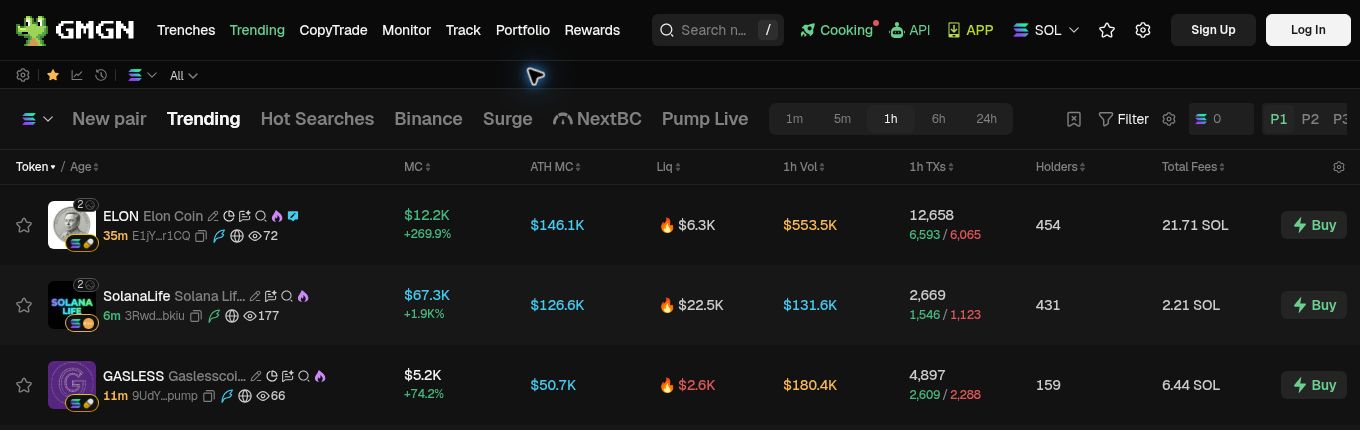
If you’re browsing, New pair and Trending give you lists to explore. A trending position tells you a token is attracting activity; it doesn’t establish the project’s quality. When you open a token page, check the chart settings as well. Price and MC show different measures, while USD and SOL use different units. A chart is easy to misread if you skip those labels.
2. Read the holders table, including the address labels
Trades shows individual transactions. Holders shows addresses with tokens still in their possession. In the English table below, Bought and Sold sit alongside Unrealized, Pnl and Remaining. Together, they help you distinguish trading activity from the value of a position that’s still open.
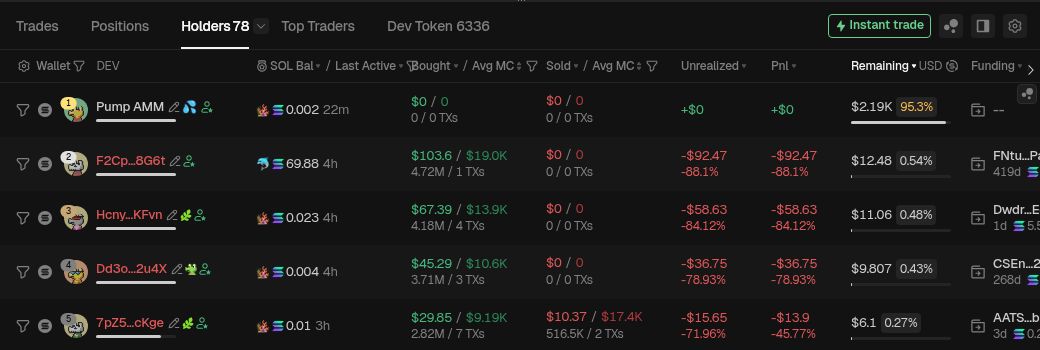
The largest holder may be a liquidity pool. Here, Pump AMM holds token reserves used for trading. Its large holding percentage doesn’t mean a single trader has bought that position. Check the address type before drawing conclusions about who owns the supply, and use transaction history to investigate further.
A ‘smart money’ label also needs context. Look at how the wallet made its profits: did a few exceptional trades account for most of the gains, or were returns spread across many trades? Has it sold the tokens? Were they bought by that wallet or transferred in? A label alone doesn’t answer those questions or predict future returns.
3. Separate realized profit from paper gains
Realized profit comes from the portion of a position already sold. Unrealized profit is the gain on tokens still held, based on their current valuation. GMGN’s documentation describes total profit as the sum of the two. When reviewing a real wallet, also check how fees, transfers and cost basis are treated. See GMGN’s explanation of token data and profit.
Here’s a simple example. You buy 100 tokens at $1 each, then sell 40 at $1.50. Those 40 tokens cost $40 and sell for $60, giving you $20 in realized profit before fees. You still hold 60 tokens. At a current price of $1.20, they’re worth $72 against a $60 purchase cost: a $12 unrealized gain.
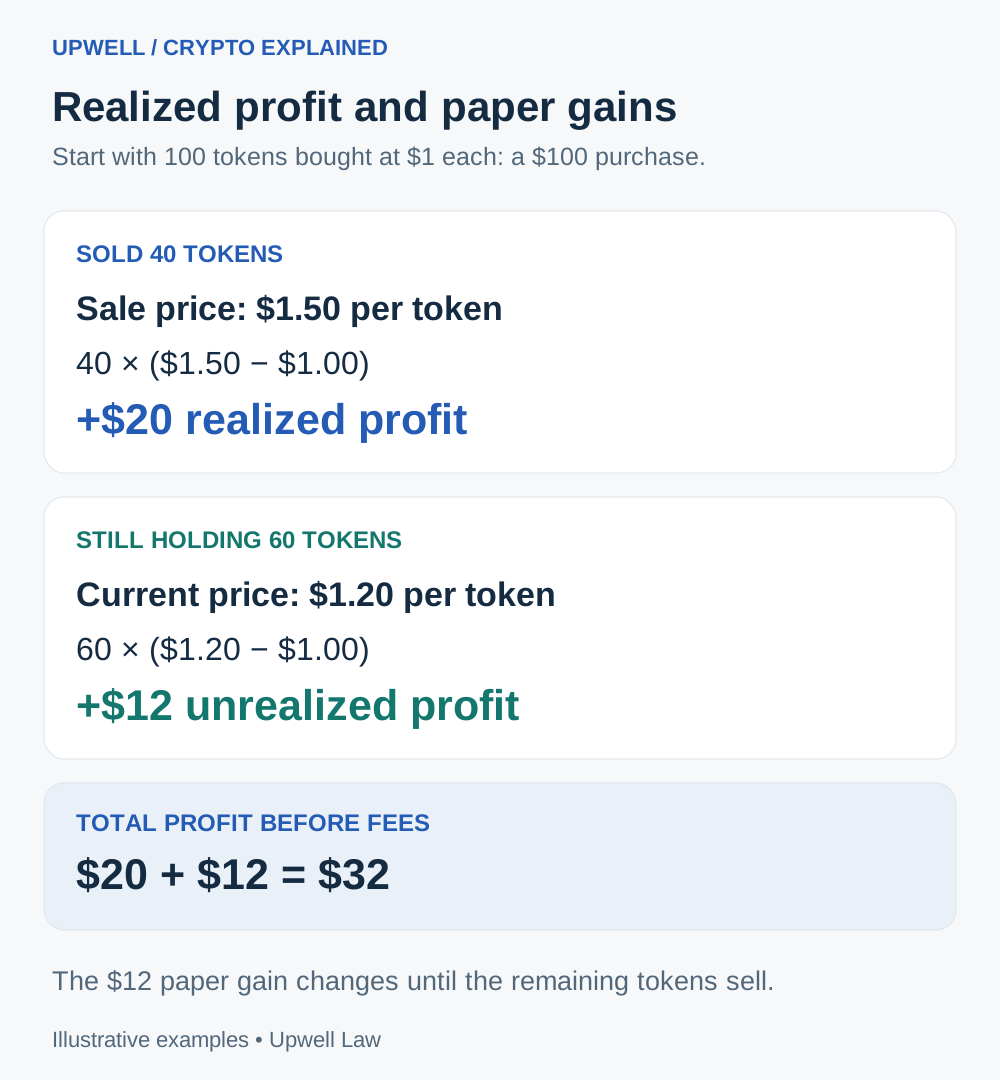
If the price falls back to $1, the $12 paper gain disappears. The $20 earned on the completed sale stays the same. When you eventually sell the remaining tokens, their actual execution price and fees determine the final result.
When you next review a wallet, work through its purchases, sales and remaining holdings in that order. Then check how much of the displayed profit is still unrealized. That gives you a clearer picture of its trading record than a large green percentage on its own.
← Back to Upwell Insights